


What Is Coolant & Why Does Your Engine Need It?
Key Takeaways What Is Coolant For? Key Parts Why Your Engine Needs Coolant How Coolant Protects Low on Coolant Keeping Your Cadillac Running FAQ
Most drivers don’t think twice about the fluid in that reservoir under the hood until the temperature gauge starts to climb. At Frank Boucher Cadillac in Racine, the question often comes up, especially when a frigid Lake Michigan morning puts a cooling system to the test. So, what does coolant do in a car, and why does it matter?
Key Takeaways
- Coolant, or antifreeze, is typically a 50/50 blend of glycol and water that keeps your engine at a safe temperature.
- It absorbs engine heat and releases it through the radiator, over and over, while you drive.
- It protects against both freezing and boiling over, so it works through every Wisconsin season.
- Additives help guard against rust, corrosion, and scale buildup.
- Low or worn-out coolant can lead to overheating and costly engine damage.
What Is Coolant For?
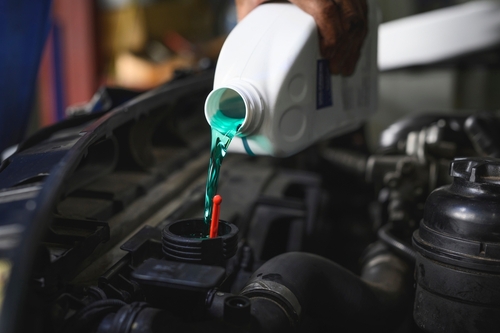
If you’ve ever wondered “What is coolant for?” the short answer is temperature control. Coolant carries heat away from your engine so it runs at its ideal temperature, and it keeps the system from freezing or boiling over.
Every time fuel ignites inside your engine, it creates an enormous amount of heat. Engine coolant flows through passages in the engine block and cylinder heads, absorbs heat, and carries it to the radiator, where moving air pulls it away before the fluid cycles back again. Most coolant combines water with ethylene or propylene glycol, plus additives that protect metal, rubber, and plastic parts. Color alone doesn’t tell you the formula, so it’s best to follow your owner’s manual. Many gasoline-powered Cadillac models are factory-filled with DEX-COOL, GM’s long-life coolant, and even the all-electric LYRIQ relies on coolant to manage battery temperature.
Key Parts of Your Cooling System
- Water pump: Circulates coolant through the system.
- Radiator: Releases heat into the outside air.
- Thermostat: Regulates engine temperature.
- Hoses and reservoir: Move and store coolant.
Why Does Your Engine Need Coolant?
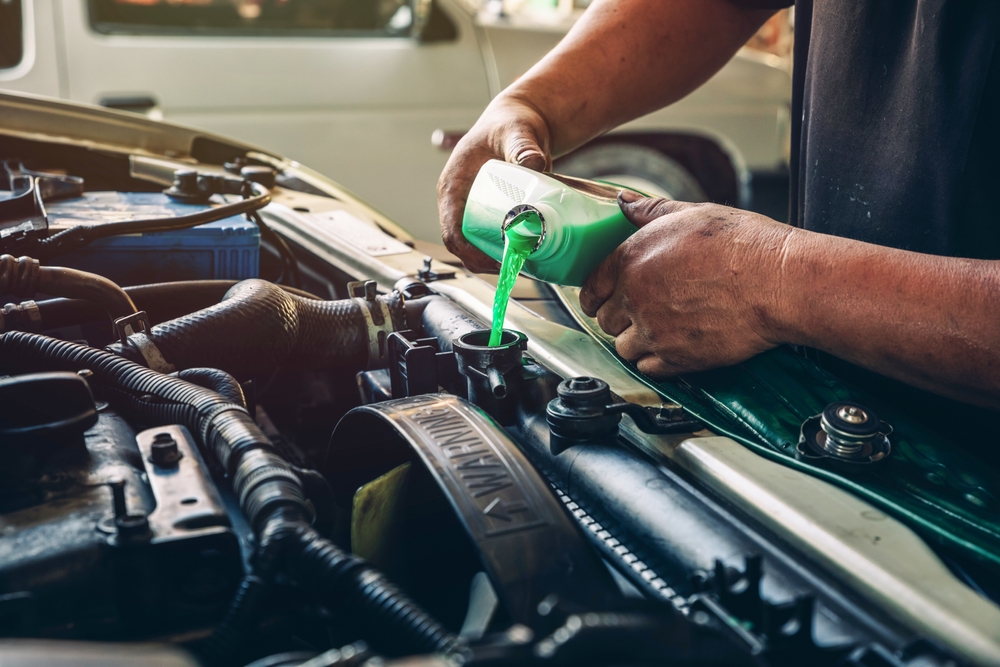
Without coolant, engine heat has nowhere to go. Temperatures can climb fast enough to damage internal components.
Combustion temperatures inside a cylinder can reach several thousand degrees, while aluminum, a common engine material, melts at roughly 1,220°F. Car engine coolant keeps heat in check and keeps the engine within the range where it’s most efficient and responsive. Climate matters too. A standard 50/50 mix protects against freezing down to about ‑34°F, a real consideration during a southeastern Wisconsin winter. Under pressure from the radiator cap, that same mixture resists boiling well above 250°F, so the engine stays protected in summer traffic. Coolant also lubricates the water pump and helps prevent corrosion inside the radiator and engine passages.
How Coolant Protects Your Engine
What Happens If Your Car Runs Low on Coolant?
When coolant runs low, your engine can’t shed heat and may overheat. If the temperature warning appears, pull over, turn off the engine, and let it cool down before continuing.
Low coolant usually traces back to a leak, a worn hose, a failing water pump, or overdue service. Old engine coolant also loses its protective additives over time, even when the level looks fine. Watch for a temperature gauge reading higher than normal, a sweet smell, brightly colored puddles where you park, steam from under the hood, or a heater blowing cool air on a cold day. Left unaddressed, overheating can warp a cylinder head, damage the head gasket, or crack the engine block.
Keeping Your Cadillac Running at Its Best
Coolant does a lot of quiet work behind the scenes. Once you know “What is coolant for?” it’s easy to see why a healthy cooling system is central to the refined performance you expect from your Cadillac. Our technicians at Frank Boucher Cadillac in Racine know these systems well and use the coolant your vehicle was designed for.
If you’ve noticed any of these signs, or it’s been a while since your last coolant service, scheduling a quick inspection at Frank Boucher Cadillac is an easy next step. Our team can check your coolant’s level and condition and recommend exactly what your vehicle needs.
FAQ
How often should coolant be changed?
Many Cadillac models require a coolant drain and refill about every 5 years or 150,000 miles. Your owner’s manual lists the exact interval.
Is coolant the same as antifreeze?
Essentially, yes. Antifreeze is the concentrate, and coolant is usually antifreeze premixed with water.
Can I add plain water instead of coolant?
Only in an emergency. Water offers no freeze or corrosion protection, so have the system properly refilled soon after.
Can I mix different types of coolant?
It’s best not to, since mixing formulas can reduce protection and cause buildup.
Is it safe to open the radiator cap when the engine is hot?
No. The system is pressurized when hot, so wait until the engine cools completely.

0 comment(s) so far on What Is Coolant & Why Does Your Engine Need It?