


What Is Coolant & Why Your Engine Needs It?

Most drivers don’t think about coolant until the temperature gauge starts creeping up. At Frank Boucher Cadillac, it’s a common conversation, especially in Racine, where January brings biting wind off Lake Michigan, and August brings sticky stop-and-go traffic. So what is engine coolant, and why does your Cadillac depend on it?
Key Takeaways
- Coolant, or antifreeze, is typically a 50/50 glycol-and-water blend that carries heat away from the engine.
- It prevents overheating in summer and freezing in winter, protecting to roughly -34°F.
- Additives prevent rust, corrosion, and scale inside the cooling system.
- Warning signs include a rising temperature gauge, a sweet smell, puddles, or steam.
- Fresh, manufacturer-specified coolant helps prevent costly engine repairs.
What Is Coolant and Why Does Your Engine Need It?
Coolant is a blend of glycol, water, and corrosion-fighting additives that absorbs engine heat and carries it to the radiator. Without it, an engine would overheat in minutes.
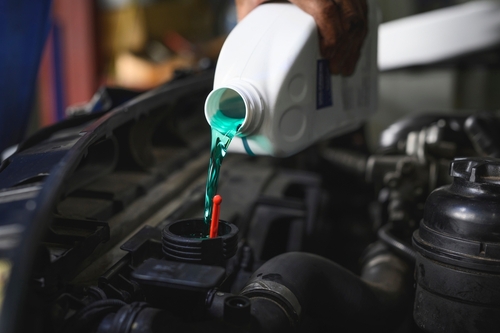
Combustion creates far more heat than metal parts can handle on their own. So what does coolant do about it? The water pump pushes coolant through the engine block and cylinder head, where it soaks up heat. It then travels to the radiator, sheds that heat into the passing air, and cycles back. A thermostat keeps the loop balanced at the ideal temperature.
Glycol does double duty. It lowers the freezing point so coolant won’t turn to ice on a frigid Racine morning, and raises the boiling point so it won’t boil over on a hot afternoon. Modern Cadillac engines run warm for efficiency, so that protection matters.
Key Parts of Your Cooling System
- Water pump: circulates coolant through the engine and radiator.
- Radiator: releases heat from the coolant into the outside air.
- Thermostat: regulates coolant flow to hold a steady temperature.
- Hoses and reservoir: carry and store coolant throughout the system.
What Are the Signs You Need Coolant?
The most common signs are a higher-than-normal temperature gauge, a sweet, syrupy smell, and brightly colored puddles under your vehicle. Steam from under the hood or a low coolant message are also red flags.

Coolant doesn’t simply disappear, so a low level usually means a leak: a worn hose, a loose clamp, or a weeping water pump. Knowing “What is coolant used for in a car?” makes these symptoms click into place. Without enough of it, heat has nowhere to go. Wisconsin’s freeze-thaw cycles and road salt are tough on hoses, so small leaks often surface after winter.
Weak cabin heat is another clue, since the heater core relies on hot coolant. Old coolant can also turn rusty or murky as its additives break down.
Common Coolant Warning Signs at a Glance
What Are the Benefits of Fresh Coolant?
Fresh coolant keeps your engine at the right temperature, protects metal parts from corrosion, and helps prevent expensive repairs.

If you’ve wondered “What is coolant for beyond temperature control?” the answer is protection. Over time, its corrosion inhibitors wear off, and rust and scale begin to form inside the radiator, water pump, and heater core. That buildup restricts flow and makes the system run hotter.
Left alone, overheating can lead to a warped cylinder head or failed head gasket, repairs that cost far more than routine service. Cadillac specifies a long-life coolant formula, and your owner’s manual lists the interval for your model. Mixing incompatible coolants can reduce protection, so the right formula matters.
Keep Your Cadillac Running Cool in Racine
Coolant isn’t the most exciting fluid under the hood, but it’s one of the hardest-working, carrying your engine through Lake Michigan winters and humid summers. Understanding how engine coolant works makes it easier to catch small issues early, and our service team at Frank Boucher Cadillac in Racine is ready to help with the right fluid and expert care.
If you’ve noticed a climbing temperature gauge, a sweet smell, or spots on the driveway, a quick cooling system inspection at Frank Boucher Cadillac is an easy next step. Certified technicians will test your coolant, check hoses, and recommend service only when needed.

FAQ
Is coolant the same as antifreeze?
Yes, the terms are used interchangeably. Antifreeze usually refers to the concentrate, while coolant is the ready-to-use mixture with water.
Can I add water instead of coolant?
In a pinch, water can get you to a service center, but it won’t protect against freezing, boiling, or corrosion.
How often should coolant be changed?
Many long-life coolants last several years. Your owner’s manual or a service advisor can confirm your Cadillac’s interval.
Does coolant color matter?
Color identifies different formulas, not quality. Always use the type specified for your vehicle.
Is it safe to drive with an overheating engine?
No. Pull over safely, turn off the engine, and never open a hot radiator cap.
Do electric Cadillac models use coolant?
Yes. EVs like the LYRIQ use coolant to manage battery and electronics temperatures.

0 comment(s) so far on What Is Coolant & Why Your Engine Needs It?